Vi anbefaler at du alltid bruker siste versjon av nettleseren din.
Operasjonssykepleier Jenny: Veien til spesialisering
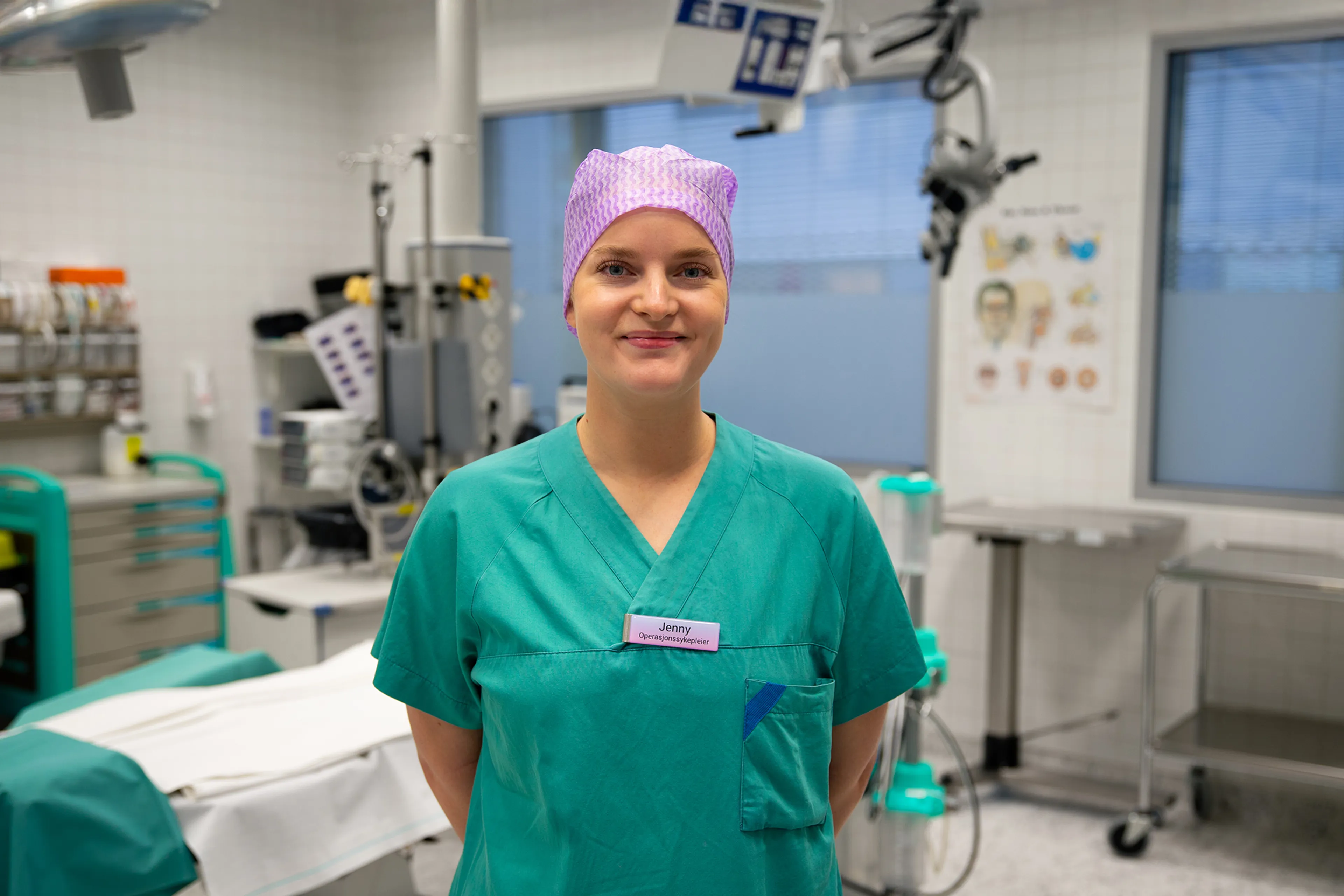
På Ahus finnes det gode muligheter for videreutdanning og faglig utvikling. Utdanningsstillinger gir ansatte muligheten til å kombinere jobb og videreutdanning. Med utdanningsstilling hos oss har Jenny Fridstrøm fått nye utfordringer, verdifull erfaring og en ny arbeidshverdag. I dag stortrives hun i rollen som operasjonssykepleier.
Publisert 11.03.2025
Sist oppdatert 10.02.2026
Fra akuttmedisin til kirurgi
Jenny visste allerede under bachelorstudiet at hun ønsket å videreutdanne seg. Etter sykepleierutdanningen startet hun i en traineestilling på Sykehuset Østfold, før hun fikk jobb i akuttmottaket på Ahus. Der jobbet hun i ett år før hun valgte å søke videreutdanning.
– Jeg er en person som liker å lære og utvikle meg, og jeg klarer aldri å slå meg helt til ro.
Hun sto mellom anestesi- og operasjonssykepleie, men valget falt til slutt på operasjon.
– I arbeidet som sykepleier har jeg alltid syntes at praktiske prosedyrer er gøy, og en operasjon er på mange måter bare en stor prosedyre. Jeg trives med strukturert arbeid, og operasjonssykepleie passet meg derfor perfekt.
Tilbake til skolebenken
Overgangen til studenttilværelsen på OsloMet var en ny hverdag for Jenny, men hun trivdes godt med kombinasjonen av teori og praksis.
– Det kan være en utfordring for mange å gå tilbake til studier etter flere år i jobb, men jeg likte det veldig godt.
– Det å styre dagene selv, kombinere teori og praksis, og gradvis bygge opp forståelsen for faget har vært veldig fint. I starten savnet jeg akuttmottaket, men etter hvert koste jeg meg mer og mer i praksis, og dro hjem med et smil hver dag.
Læring gjennom erfaring
Studiet var delt i 50/50 praksis og teori, med tre praksisperioder. Jenny gjennomførte store deler av praksisen på dagkirurgisk avdeling ved Ahus Nordbyhagen, hvor hun også hadde bindingstid etter endt utdanning.
I tillegg til praksisperiodene fikk hun mulighet til å reise på utveksling til Sør-Afrika. Der jobbet hun i tre uker ved et offentlig sykehus og i tre uker ved et privat sykehus.
– Det var en lærerik erfaring. Standardene var lavere enn i Norge, og de hadde ikke alltid det de trengte til pasientene. Det gjorde meg takknemlig for ressursene vi har her hjemme, og ga meg et nytt perspektiv.
Trygg start i et kjent miljø
Etter utvekslingen gikk Jenny inn i arbeidslivet som ferdigutdannet operasjonssykepleier. Erfaringen fra praksis på avdelingen gjorde overgangen fra studiene både enklere og tryggere.
– Etter et og et halvt år der jeg hadde styrt dagene mine selv, var det uvant å gå tilbake til en strukturert arbeidshverdag, men det var også betryggende å komme til et miljø hvor jeg følte meg ivaretatt.
– Oppstarten hadde nok vært helt annerledes hvis jeg ikke allerede kjente folk og rutinene her. Jeg blir godt tatt vare på og satt inn i ting på en god måte.
En viktig rolle i operasjonsteamet
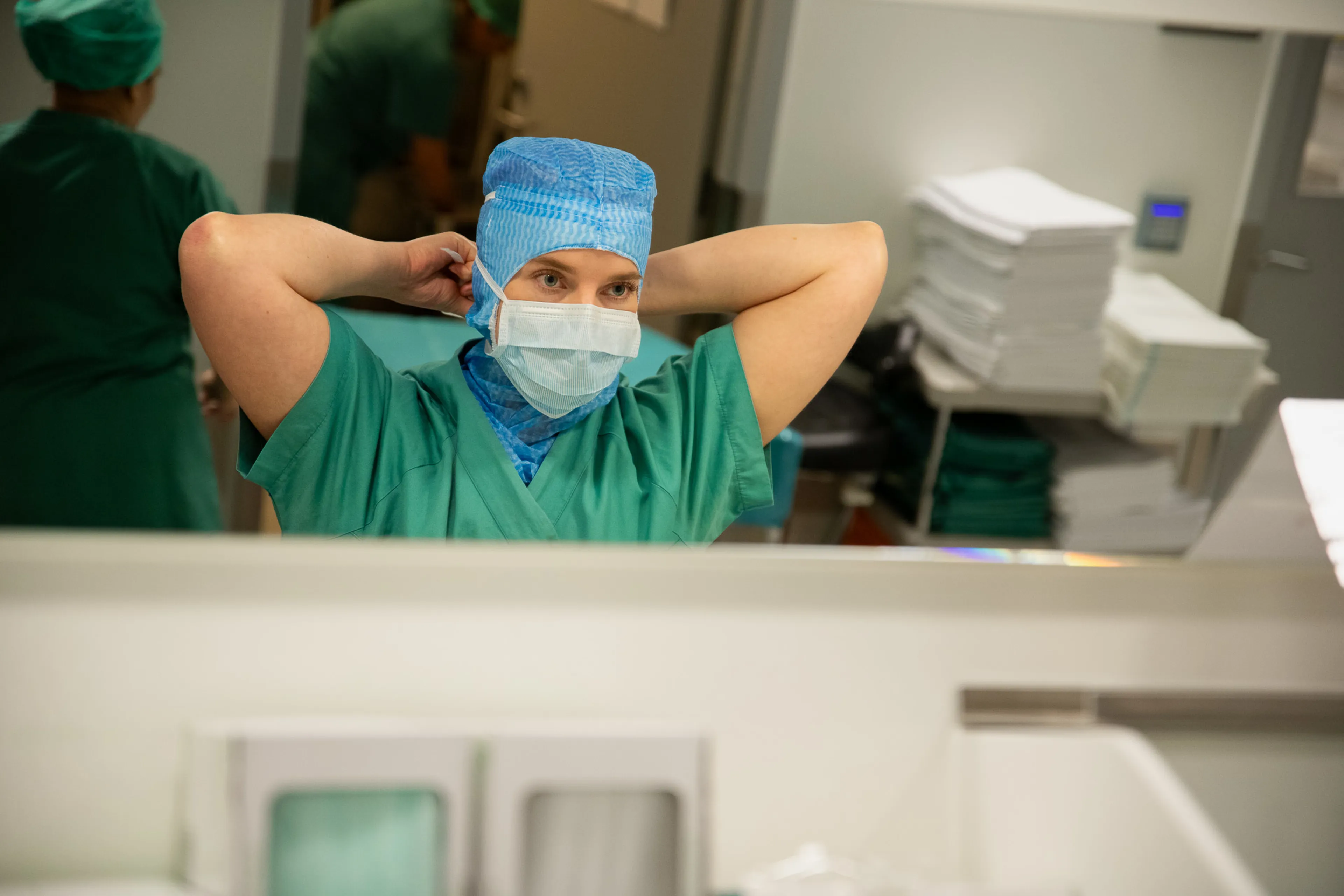
Som operasjonssykepleier har Jenny en nøkkelrolle inne på operasjonsstuen.
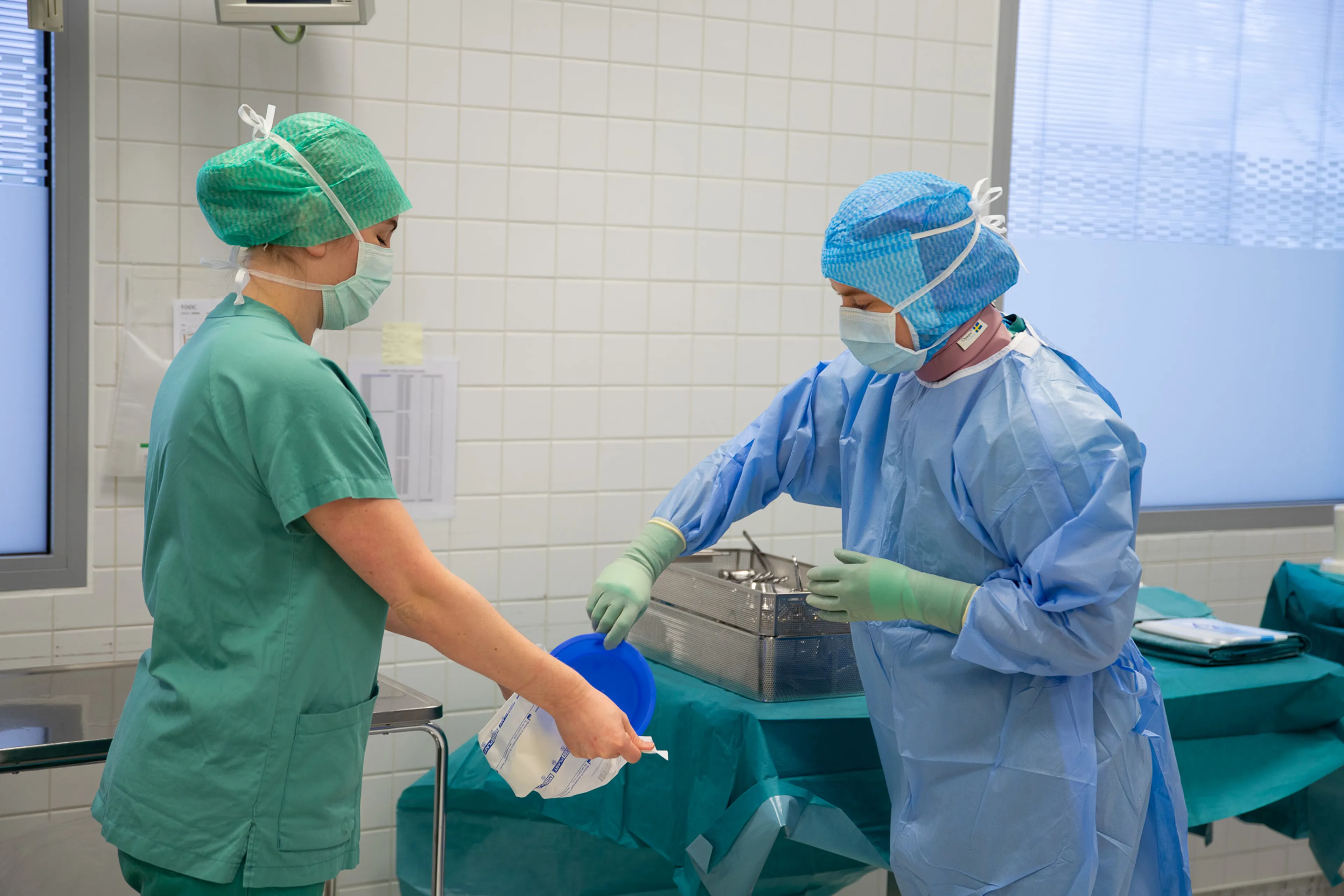
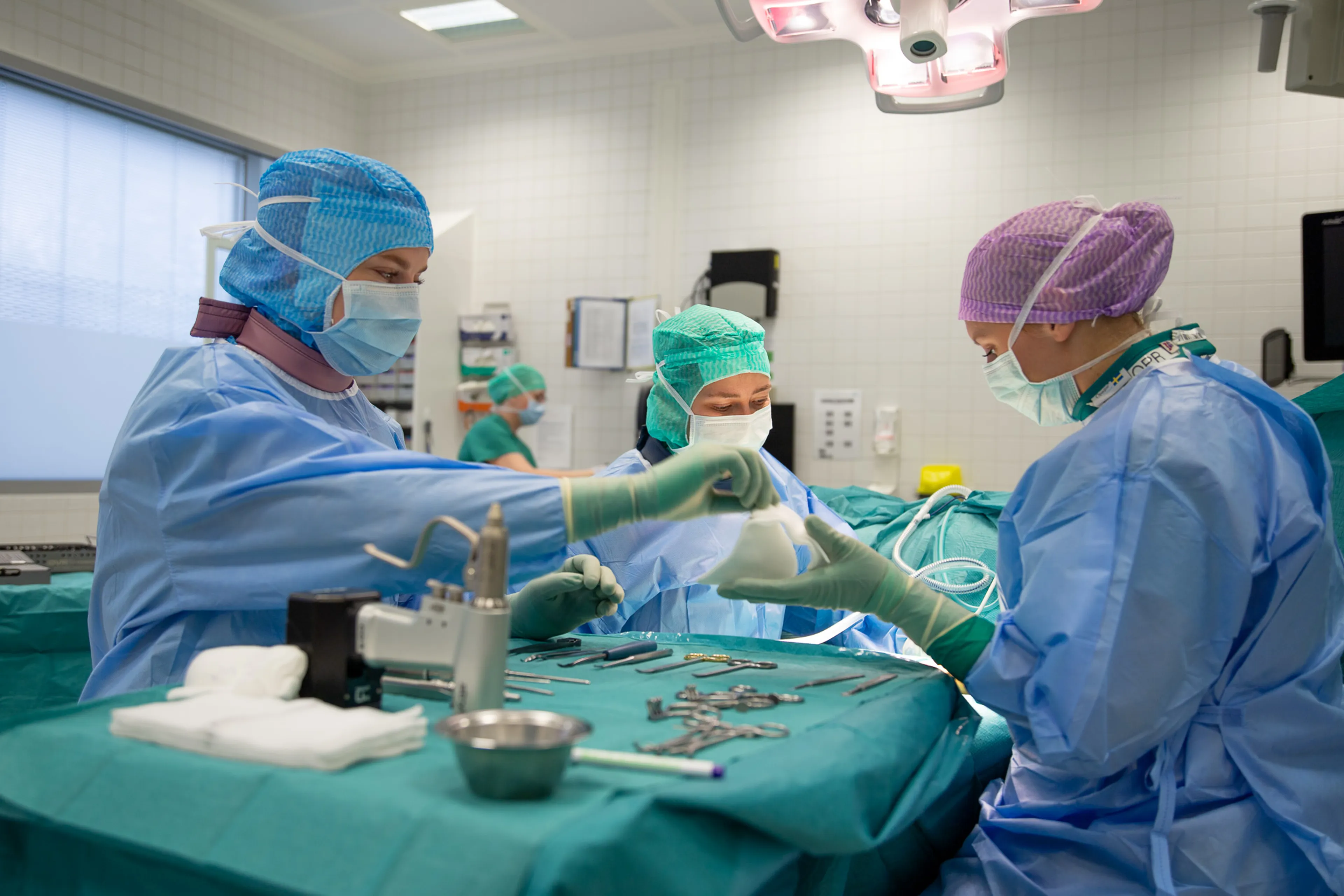
– Vi har ansvar for at alt går på skinner. Vi skal ivareta pasienten og passe på at alt utstyret til operasjonen er sterilt, tilgjengelig og riktig. Under operasjoner er vi alltid to operasjonssykepleiere: én steril utøvende som jobber tett med kirurgen, og én koordinerende som tar imot pasienten, dokumenterer og henter utstyr ved behov. Vi bytter ofte på rollene i løpet av dagen.
Hovedseksjonen hennes er ortopedi, hvor de utfører inngrep som kikhullsoperasjoner i kne og skulder, og operasjoner av ulike bruddskader.
– Typisk kan vi ha mellom én og seks operasjoner om dagen, avhengig av inngrepene. Vi spesialiserer oss på en hovedseksjon for å bli gode på det vi gjør, men vi har også en sekundærseksjon for å få bredere erfaring.
Jenny huker av sjekklisten for trygg kirurgi, som er et verktøy for å bidra pasientsikkerheten.
Læring, mestring og godt samarbeid
Jenny stortrives i sin nye rolle som operasjonssykepleier.
– Selv om vi ofte gjør de samme typene inngrep, er ingen operasjoner helt like. Samarbeidet mellom operasjonssykepleiere, anestesi, kirurger og resten av teamet er avgjørende for at alt skal gå effektivt og trygt. Og den følelsen av å gradvis mestre ting og bli trygg i rollen – den er utrolig givende.
For de som vurderer videreutdanning, har hun ett klart råd:
– Hvis du har tenkt tanken og har lyst til å spesialisere deg, så bør du gjøre det – uansett alder eller tidspunkt i livet. Det er verdt det i det lange løp!
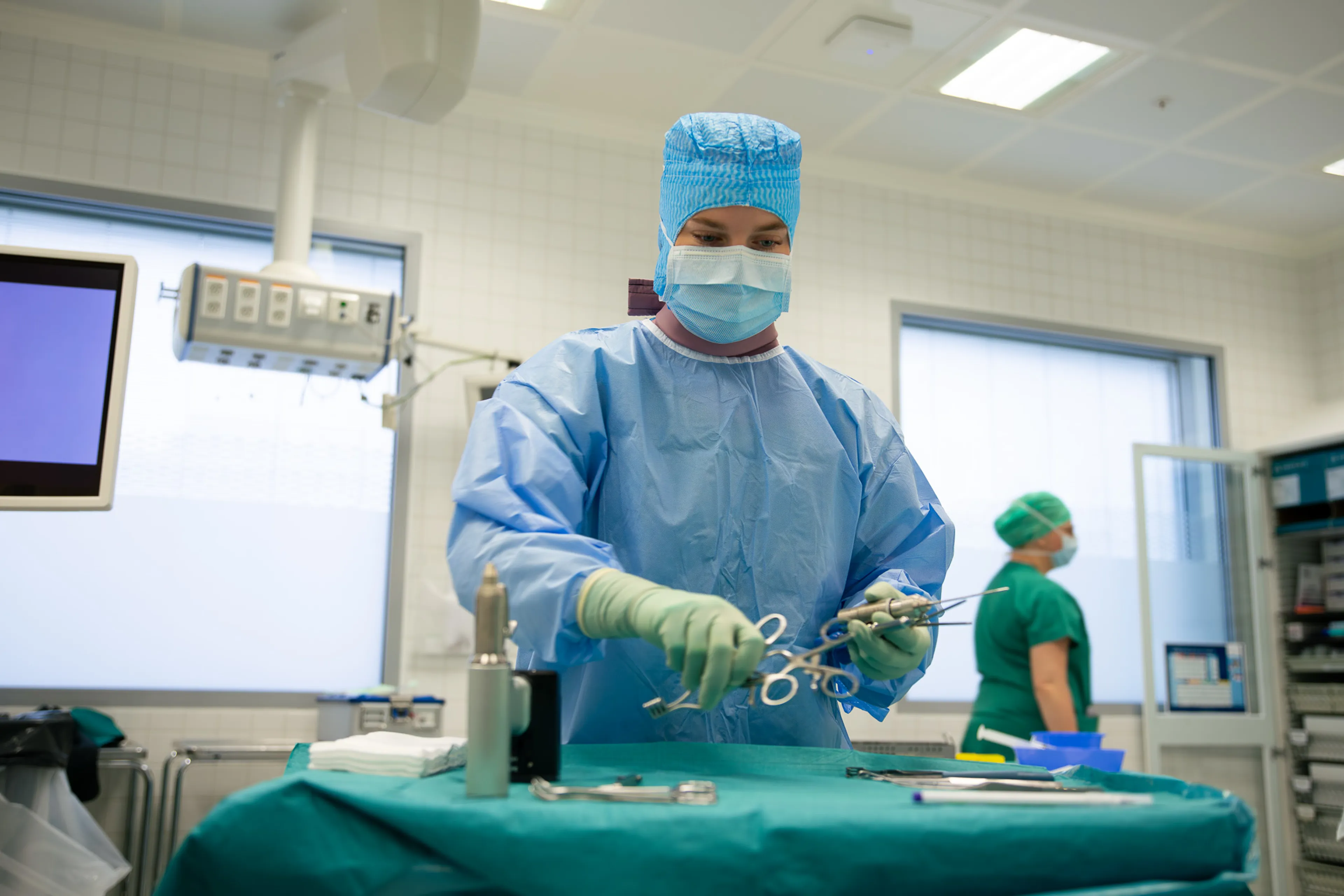
Under denne operasjonen er Jenny sterilt utøvende.